
Large-Scale Color Realism Tattoos: Planning a Bigger Piece with HIP
A sleeve gives a tattoo room to develop. A face can carry an expression you can read from across the room. A bird can stretch its wings down an arm. Color can move through several subjects instead of stopping at the edge of one small image.
Large-scale tattoos are the projects HIP wants to take on more of. For anyone considering a substantial color realism piece at Social Graces Tattoo Studio in Miamisburg, Ohio, the first conversation should be about the whole idea: the subject, the space it needs, and how you want it to feel.
Three images among the newest uploads to HIP’s portfolio library offer different ways to look at that conversation. They aren’t templates to copy. They show how realistic faces, bold color, and supporting elements can work together.
A portrait sleeve needs a path for the eye
In the sleeve shown here, the portrait sits high on the arm. Below it, a red cardinal opens its wings, leading into smaller imagery and lettering farther down. The face and bird have different shapes, but the warm reds and browns give the composition a connection.
Notice what the space makes possible. The portrait has room for the mouth, eyes, and changes in the skin tones. The bird has enough width for its wings to read clearly. The lower elements continue the piece without needing to be as large as the face.
That hierarchy matters in a color realism sleeve. If every object demands the same amount of attention, the design can feel crowded even when each individual subject is well rendered. A larger project benefits from deciding early which element leads and which elements support it.
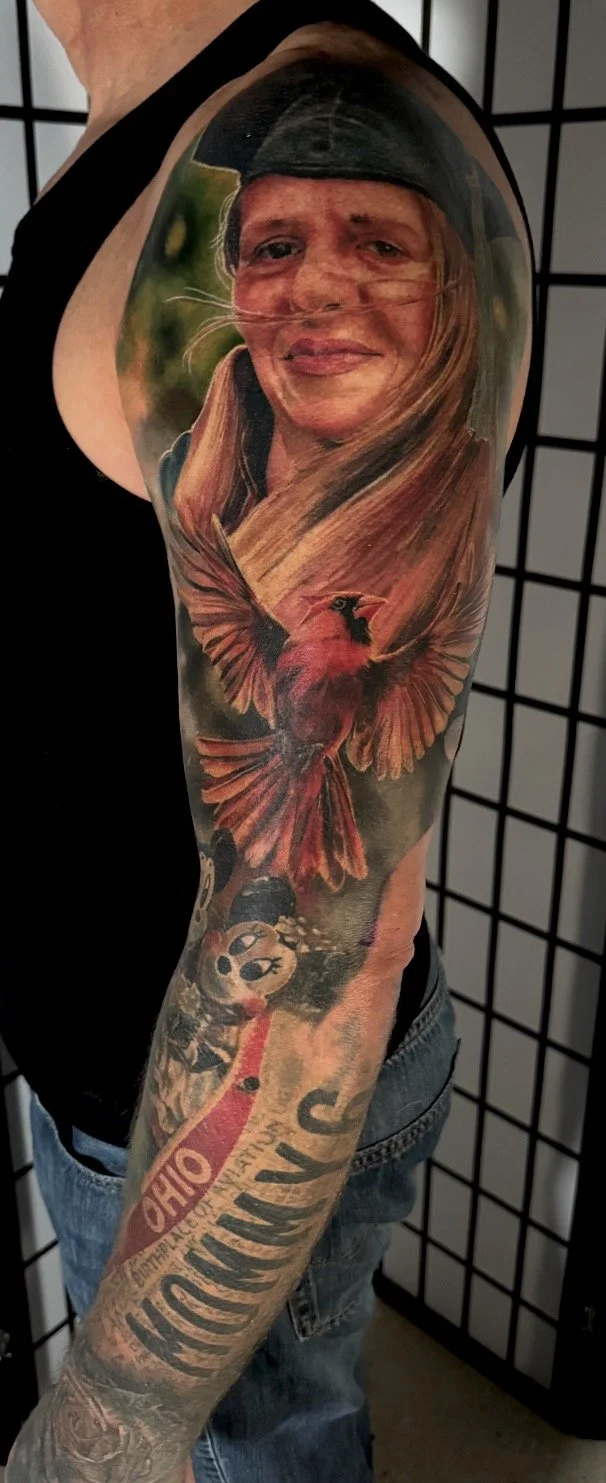
A portrait and red cardinal create a visual route through this sleeve. The image shows the composition; the client’s personal story remains theirs.
Realism can make room for surreal imagery
Color realism doesn’t limit a tattoo to scenes that could exist in a photograph. A face can have convincing volume while the surrounding imagery is deliberately strange.
The horned portrait below uses a bright orange focal point above the face, deep dark shapes through the headpiece, and red and blue areas around it. The strip of animal eyes across the face interrupts the portrait. Those are distinct elements, but the vertical arrangement holds them together.
Here, realism is doing one job and composition is doing another. Changes in light and shadow make the face feel dimensional. The placement of the headpiece, eyes, and color shapes gives the overall piece its direction. Simply adding more detail would not replace either of those decisions.
For a larger custom tattoo, it helps to separate the subject from the mood. You might want a realistic portrait with something dreamlike around it, or a recognizable subject in dramatic, unnatural light. Bring those ideas into the discussion without feeling you have to assemble the final design yourself.
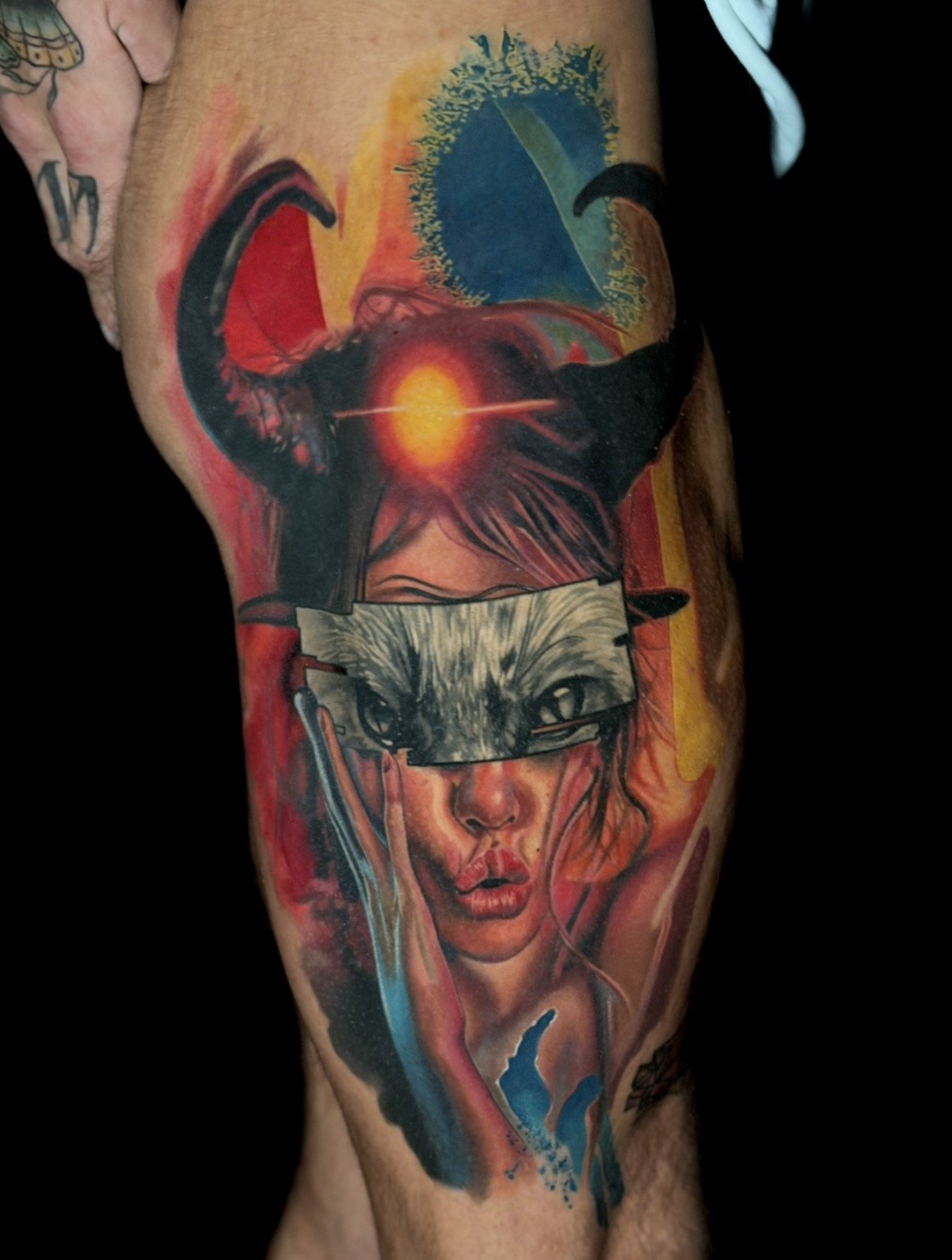
A realistic face anchors a surreal composition, with warm and cool color areas framing the central subject.
Two subjects need more than a shared outline
The clown-and-car tattoo offers another useful example. The face dominates the upper part of the piece, while a gold car sits below at an angle. The portrait has a strong expression; the car brings a different kind of detail, from reflective panels to the dark windshield and grille.
Warm color appears in both sections. The orange and red around the face relate to the gold bodywork below, while darker areas separate the forms. The car remains readable without competing with the portrait on size.
That’s a useful question for anyone planning several subjects in one tattoo: what connects them visually? The answer might involve color, lighting, direction, or a repeated shape. Meaning is a reason to include something, but the design still needs a way to make the elements work together on the body.
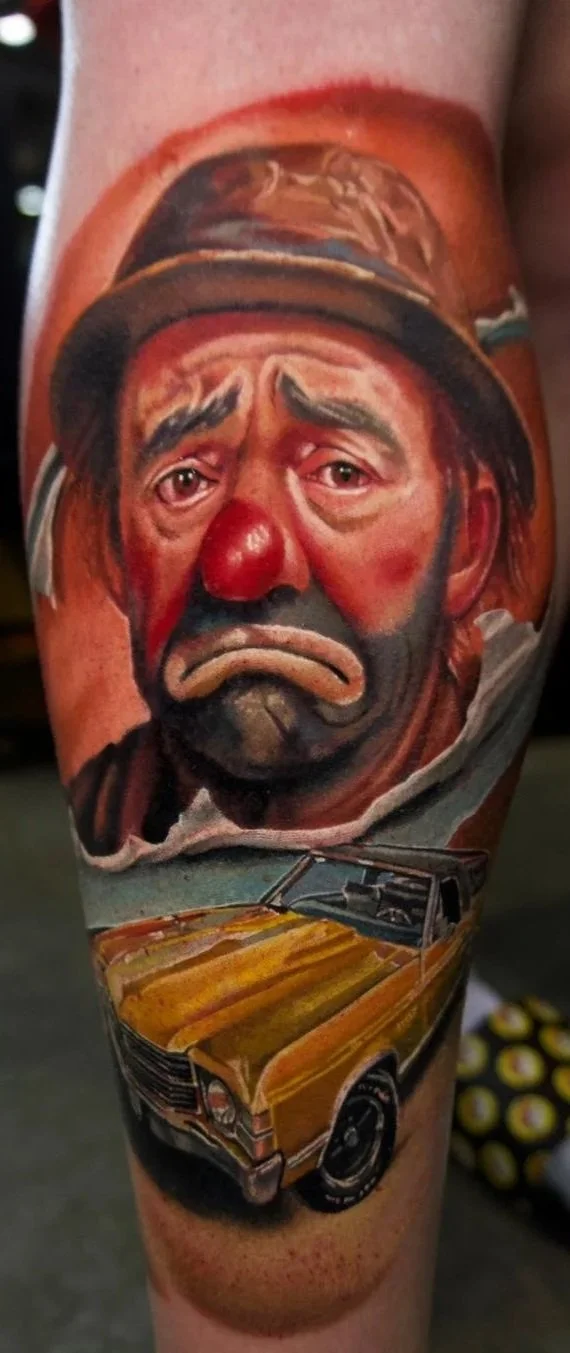
Different textures and subjects share a warm palette, with the portrait taking the lead.
Why scale changes the design conversation
A full sleeve, a large leg piece, and a back piece offer different shapes to work with. An arm turns away from view. A leg changes width. A back offers a broader surface, but still moves with the body. The composition has to account for that rather than treating skin like a flat poster.
More space can allow a larger focal subject and clearer separation between elements. It also creates decisions about transitions: what happens around the side, where the busiest section sits, and which areas stay quieter. Bigger doesn’t automatically mean adding more objects.
If your long-term goal is a sleeve, say so at the beginning—even if you’re discussing the first section. Existing tattoos, gaps you want to keep, and areas you don’t want covered all affect what can be planned. Clear photos of the area are useful starting information.
Color realism across multiple sessions
Large projects often require several appointments. The number and length depend on the design, placement, amount of coverage, and how the work is organized. A photo of somebody else’s tattoo can’t give you a reliable schedule or price for your own.
Ask how the project might be divided, what the first stage would include, and what needs to be decided before starting. If you travel to the Dayton area, mention that early so timing can be discussed. Avoid building your plans around an assumed completion date.
It’s also worth asking about healed examples when available. Fresh images are useful for seeing composition and detail, but they don’t answer every question about how the finished tattoo will look over time. Follow the artist’s instructions for care between appointments.
The large-scale projects HIP wants to hear about
HIP is interested in taking on more large-scale tattoo projects. If you’re considering a color realism sleeve, a substantial leg piece, or a back piece, send the idea in for a conversation about fit and direction.
You don’t need to arrive with a finished collage. Explain the main subject, the placement, and what you like about HIP’s work. Point to a color palette, an expression, or a particular composition. Include any existing tattoos in that area and the approximate size you’re considering.
For help narrowing down images, read the guide to choosing color realism references. For a closer look at light, contrast, and palette, see what makes a color realism tattoo work.
Send HIP your large-scale tattoo idea for a project at Social Graces Tattoo Studio, 615 S Main St in Miamisburg, near Dayton, Ohio. Current availability, pricing, and the plan for your piece can be discussed through the inquiry process.
